Flexible access to pay is becoming more and more popular. Many companies around the world already offer this benefit and are seeing positive effects on their employees’ financial wellbeing. Yet concerns still surround Earned wage access – whether about complicated implementation, low interest, or a negative impact on employees’ finances. Let’s look at the most common concerns and explain why they’re unfounded.
Will there be interest in the benefit?
Studies show that 80% of employees would welcome the option of flexible pay1, and companies that have introduced this benefit see high adoption of it. Even so, some companies doubt whether their people will actually use it. They often ask employees whether they would be interested in wage advances or more frequent pay – and the answers tend to be cautious.
Reality, however, looks different. While in surveys only 20% of employees say they would use the benefit regularly, after it is introduced as many as 62% actually use it every pay cycle or every other pay cycle1. This shows that people underestimate their own need for financial flexibility – once they get the option to access their earned money at any time, they actively use it.
Are employees at risk of financial problems?
A common fear is that employees will start withdrawing money recklessly and fall into a debt spiral. The reality, however, is different – Earned wage access actually helps people avoid financial crises.
Instead of having to reach for expensive loans or credit cards, employees can use their own already-earned money. A DailyPay study shows that 69% of users stopped using payday loans after gaining access to flexible pay3. Earned wage access helps employees manage their money more responsibly, not the other way around.
As Matěj Kučera from the National Institute of Mental Health puts it: “The concept of money is hard for the human mind to grasp. When a person picked apples from a tree, it was more natural to take as many as they needed at that moment than to pick the whole tree and try to make it last a long time.” Earned wage access, in effect, gives people back a more natural way of managing their money.
Easier to implement than you think
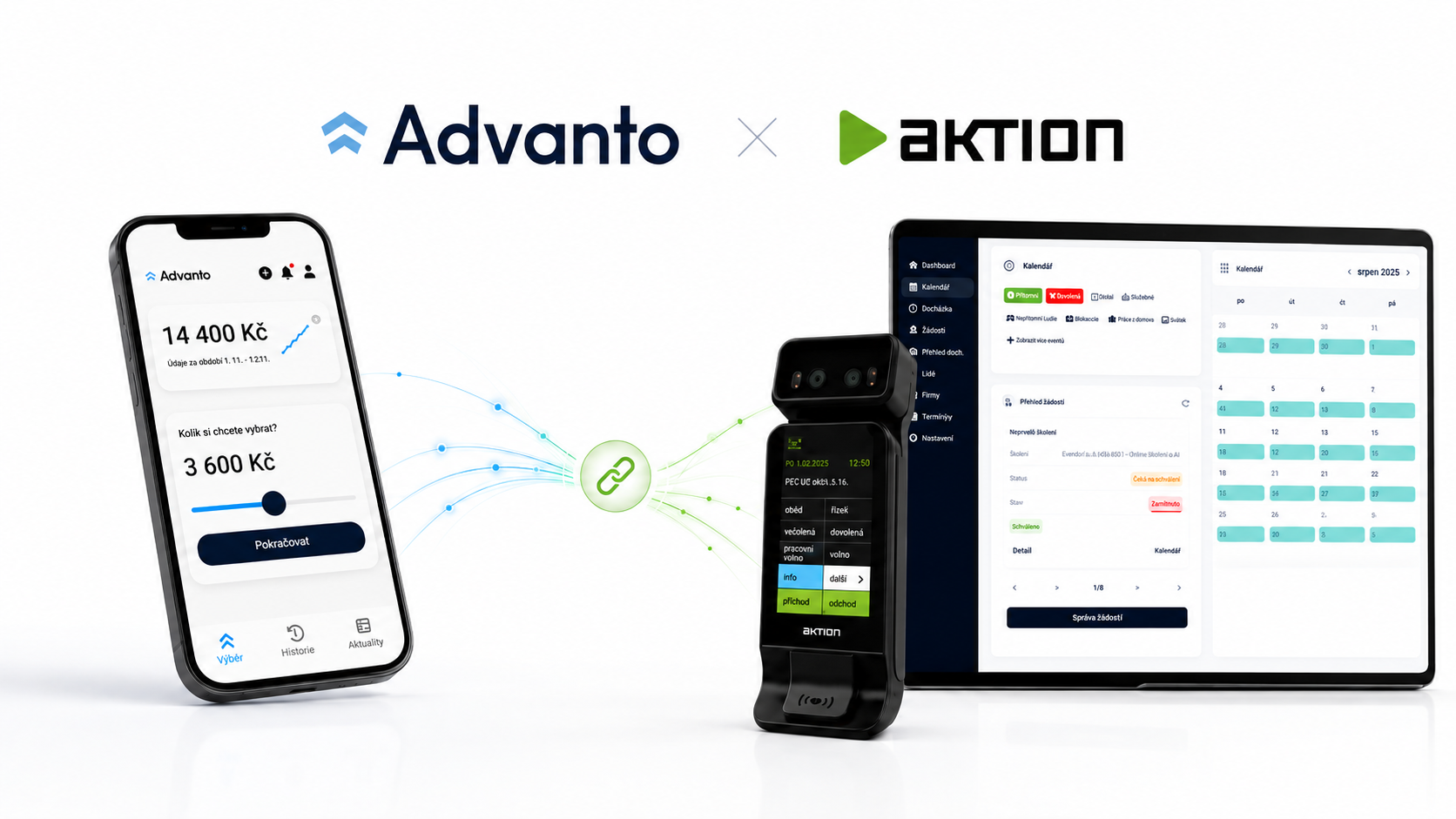
Modern systems like Advanto integrate easily with existing HR and payroll systems. Implementation doesn’t require complicated administration – for example, at Notino, which has more than 1,700 employees, implementation took just 4 weeks. Advanto already has ready-made integrations with most payroll and attendance systems in the Czech Republic and Slovakia, such as Helios, Aktion, or Okbase. So it takes just a few clicks and Earned wage access is ready to use.
How to access Earned wage access without a smartphone?
Today, more than 84% of the population owns a smartphone, and 87% of people use the internet regularly2. But we also think of those who don’t have a smartphone – Earned wage access doesn’t work only through the mobile app; employees can also access it through the web interface. So for the vast majority of workers, access to the service isn’t an issue.
A win for companies and employees alike
Concerns about Earned wage access are often based on myths and unverified assumptions. Data and the experience of companies that have introduced this benefit prove that it’s a worthwhile service for both employees and employers – from greater financial wellbeing and satisfaction to lower turnover and higher productivity.
Want to learn more? Contact us and we’ll be happy to show you how Earned wage access works in practice!